Millennials vote at lower rates than older age groups. The lower voting rate matters because millennials are naturally different than those that are older. Millennials often have school age children at home. They are probably thinking about the education needs of those children as well as the healthcare needs of their growing families. They may be anxious about the cost of putting those children through college. Given that millennials are more likely to have gone to college, some may also be wrestling with school loans. The point is, the aspirations, priorities, and concerns of millennials are quite different than those of older voters.
And yet they don’t vote so much, as illustrated in the screenshot in Figure 1. The screenshot is taken from the Georgia Election Lore ’24 app. What it shows is that millennials make up the largest voting block in statewide contests in the 2022 general election, but they are out voted by both Boomers and Gen X.
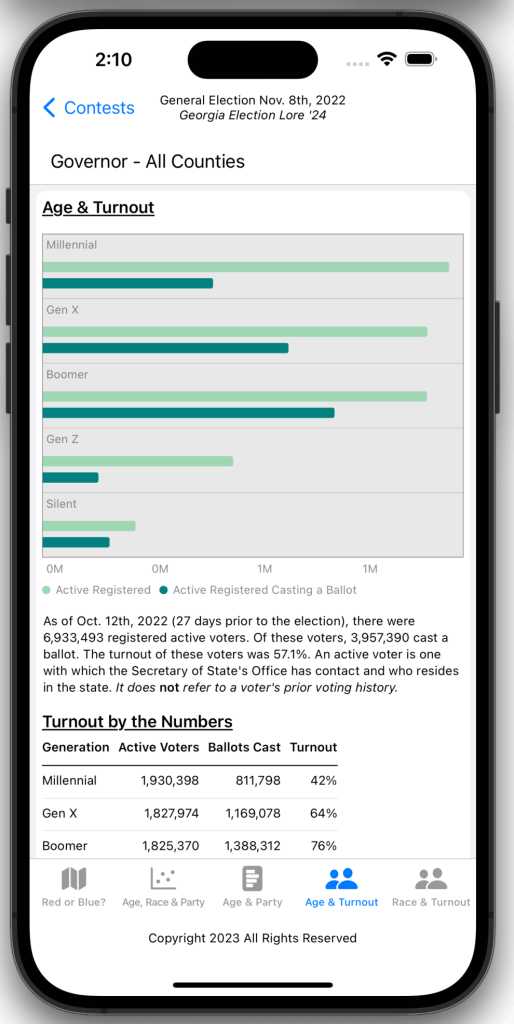
Figure 1: Turnout by Generation, 2022 General Election
Many contests, however, are already decided before the general election as shown in Figure 2. In this screenshot, one can see that many state senate races are uncontested in the general election. Solid red means there was no Democratic candidate in the general election. Solid blue means there was no Republican candidate. The solid red and blue contests were decided in the primary.

Figure 2: Uncontested State Senate Contests, 2022 General Election
The millennial voting rate in primaries is very low. Figure 3 depicts voting rates by age group for the Republican primary. Though millennials make up 27% of the electorate and 21% of the general election vote, they account for only 10% of the Republican primary voters. Millennials vote at higher rates in the Democratic primary, but the voting rate is still low.
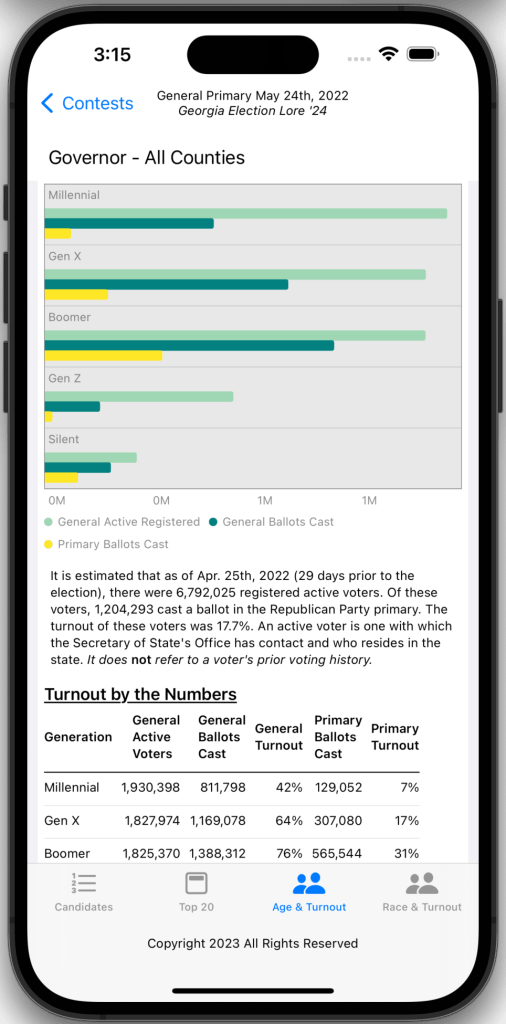
Figure 3: Turnout by Generation, 2022 Republican Party Primary
In some ways the low voting rate makes sense because so many politicians seem out of touch with millennials. Politicians, however, tend to align themselves with those that are voting and those that are voting are older. It’s all in the numbers and it’s a vicious cycle.
If millennials want to break that cycle — if they want be heard and they want their priorities addressed — they need to vote. In particular, they need to vote in the primaries. The demographics of the voters are not going to be missed by the candidate (at least not by those that want to win). There will, however, be a lag between a younger vote and changes in candidate priorities. Specifically, candidates will self select based on their affinity with voters in past elections. Moreover, if younger voters were absent in these past elections, the candidates that choose to run will tailor their priorities to those of older voters. Of course, millennials can shorten the lag by being more vocal or choosing to run for office. Now for the ironic part. Millennials often have kids and jobs, what they typically don’t have is a lot of free time to get politically involved.
In any case, candidates operate with a different motivation. Namely, they want to win. Some candidates may leverage this cycle to their advantage and rely on the status quo to give them an edge. These candidates look at millennials (or younger voters in general) and conclude they don’t vote; so, they dismiss them. Alternatively, candidates can break the cycle by looking at those non-voting millennials as an opportunity or as a threat. These candidates choose to engage millennials to build a winning coalition or mitigate the risk that their opponent will use the younger vote to secure a win.
Ultimately, if millennials vote in greater numbers than they have in the past, they change the political priorities of the state in manner that is more favorable to their needs. That is not likely to happen, however, if they don’t encourage one another to participate in the political process. Candidates, on the other hand, that work to engage millennials may prove competitive in contests their party thought unwinnable.
 Election Lore