In any democratic process, voter engagement is essential for the vitality of the system. One crucial aspect of engaging voters effectively is understanding the distribution of voters across geographical areas, that is the voter density. Voter density provides invaluable insights into where efforts should be concentrated to maximize impact and achieve electoral success. Therefore, incorporating voter density into a comprehensive voter contact strategy is of paramount importance.
Firstly, voter density serves as a compass for campaign resource allocation. By identifying areas with high concentrations of voters, campaigns can direct their resources, including time, manpower, and finances, towards these regions strategically. Focusing efforts where they are most likely to yield the greatest results optimizes the efficiency of the campaign. Efficiency is important because there will never be enough resources, particularly time, to do everything you might want to do.
Secondly, voter density aids in tailoring communication strategies. Different regions often have distinct demographics, socio-economic backgrounds, and political inclinations. By understanding voter density, campaigns can customize their messaging to resonate with the specific concerns and priorities of each area. This personalized approach enhances the relevance and effectiveness of voter outreach. Ultimately, you will foster stronger connections and be more in touch with your voter.
Thirdly, voter density informs the selection of outreach methods. In densely populated areas, door-to-door canvassing or neighborhood events might be more effective in reaching a significant number of voters personally. Conversely, in sparsely populated rural regions, digital outreach or targeted advertising may be more suitable. By aligning outreach methods with voter density, campaigns can maximize reach and engagement, ensuring that no potential voter is overlooked.
Lore uses Heat Maps to convey voter density at the precinct level. Density rankings are approximate because Lore presumes precincts are similarly sized in terms of area. This assumption is mostly true but not always. The heat map below shows the relative density of Republican Party voters (you can build a profile that is Democratic Party centric as well) in State House District 24. Brighter colors indicate a higher densities voters. Darker colors indicate a lower density of voters. For example, precinct 10 in Forsyth county (bright yellow) has the largest number of Republican voters in the district. Precinct 34, to the south, has the least number of voters. Precinct 40, to the north, generates the second largest number of Republican votes.
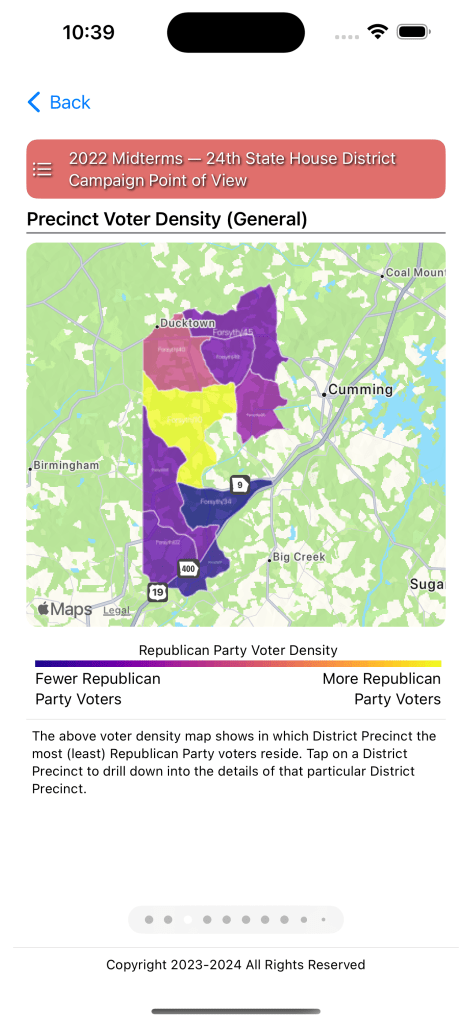
The above map gives you a geographic sense of how voters are distributed. You can also tap a precinct and dig deeper into the details. If you want a high level view of the numbers that underpin the map, then take a look at the Precinct KPIs page, which is shown below.
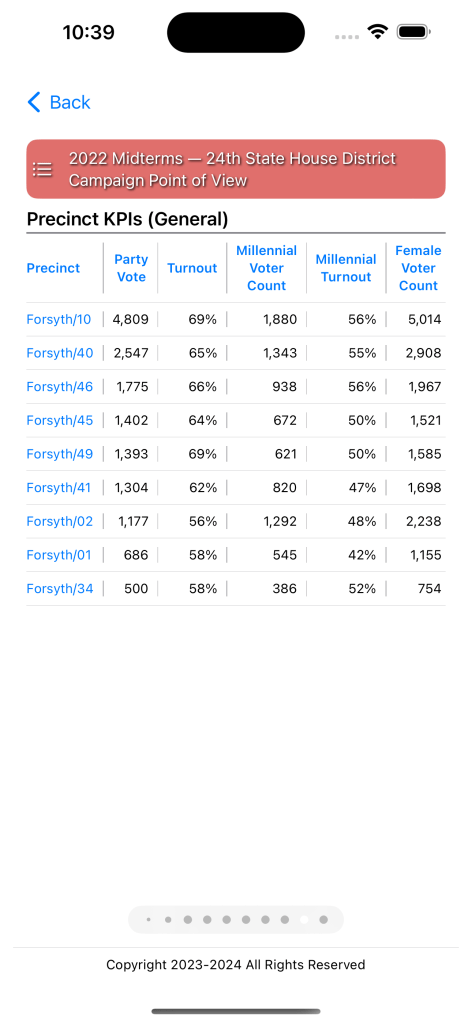
A thorough data analysis is the foundation of your campaign’s voter contact strategy. Lore does this step for you. You use Lore’s analysis to prioritize, tailor messaging, and select outreach methods.
- Prioritization: Prioritize areas with high voter density for intensive voter contact efforts. Allocate resources such as campaign staff, volunteers, and advertising budget accordingly.
- Message Tailoring: Customize campaign messaging to address the specific concerns and interests of voters in each targeted area. Ensure that communication resonates with the local demographic and political landscape.
- Outreach Method Selection: Select outreach methods based on voter density and geographical characteristics. Employ a combination of door-to-door canvassing, phone banking, digital outreach, and community events to maximize reach and engagement.
Once you put your strategy into action, you will want to continuously monitor its effectiveness through additional data analytics and feedback mechanisms. Based on the feedback, adjust tactics and resource allocation as needed to optimize impact.
In conclusion, incorporating voter density into a voter contact strategy is essential for maximizing the effectiveness of electoral campaigns. By strategically allocating resources, tailoring messaging, and selecting appropriate outreach methods, campaigns can engage voters more effectively and increase their chances of electoral success.
 Election Lore
Leave a comment